Showing posts with label Evaluation Questions. Show all posts


Our Music Video:


The Kooks - Always Where I Need To Be

The 1975 - The City


By including these conventions, technical and symbolic, of Indie Rock genres, then my music video is specific to a target audience and therefore would be more successful as it adheres to the conventions.


This is my evaluation task 2 in which i made a video with my group about how our products work together.


How all three Products Work Together:

The Music Video has earthy aspects and is set in the woods, this is similar to the Digipack, as it has aspects of the band and trees. The Digipack also has a still from the video which makes a direct relation and link to the Music Video. The Digipack relates to the Website as they both have blank space which is a technical convention of the Indie Rock Genre. All products are linked and are simple yet intriguing.
Models of Audience
  • Over the years, a large number of academics have attempted to understand the ways in which audiences interact with the media they consume
  • Three general models have dominated this research

How did you gather your audience feedback? What methods did you use? Present you stats, feedback from questionnaire and focus groups

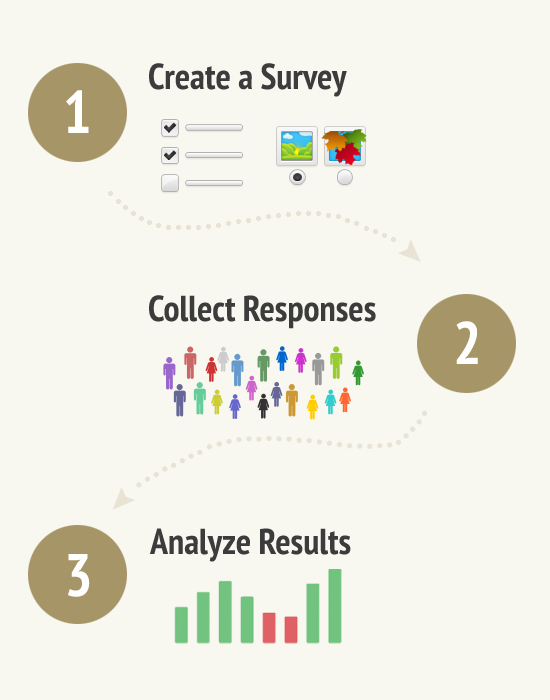
We used several different forms of gathering audience feedback such as YouTube, Freeonlinesurvey.com and Focus Groups. This allowed us to use the internet, to access a larger target audience
  • YouTube
  • Freeonlinesurveys.com (closed questions)
  • Focus Groups (open questions)
How did the demographic or psychographic profile of your audience affect the kinds of readings they produced?

Defining the Audience
  • It is useful for institutions and academics to be able to build up detailed accounts of how audiences are constructed
  • Rather than seeing audience as masses or in simple numerical terms, it is common practice to find ways of segmenting the audience
  • This segmentation can be achieved both demographically and psychographically
Demographic = JICNARS
Psychographic = VALS
Applying Audience Theory
  • Look at who your target audience was
  • How did you profile your audience?
  • Which VALS did specify for your audience
  • Did you have a primary and secondary market – how did your production target consumers/ youth culture? (cartoons or animated children films – primary audience kids – secondary audience parents who take kids to cinema)
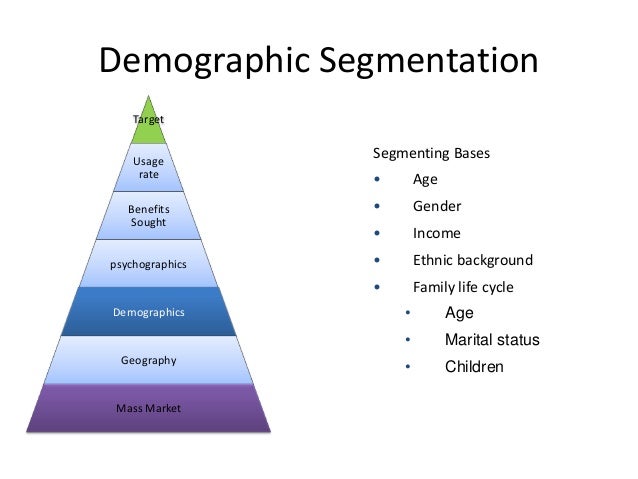
Demographic segmentation
  • This is where an audience is segmented according to various significant social criteria eg gender, class, race, sexuality
  • One of the most common demographic approachers to audience involves the JICNARS scale
  • JICNARS – scale based on employment
We used demographic segmentation, as we found our target audience through age and gender. Our target audience was Girls of 15 years + and our secondary target audience was Boys of 17 year +. Therefore our audience feedback, using the focus group, was Demographic as we had a specific group of people. This was effective as we approached our target audience and asked them specific open questions which allowed us to make specific changes.

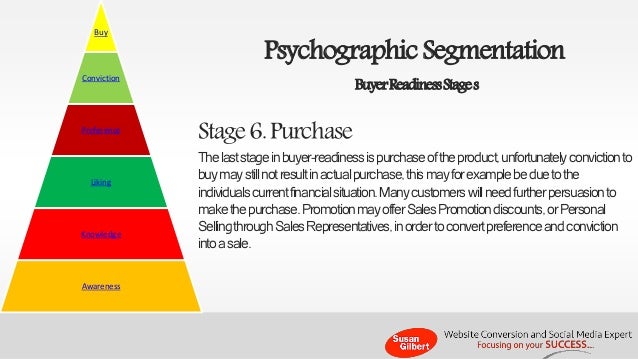
Psychographic Segmentation

We used Psychographic Segmentation when taking audience feedback as we created a closed questioned online survey that was open to anyone who wants to take the survey. This means our audience will be a range of people who have various attitudes, beliefs, values etc.
  • Also known as lifestyle profiling
  • Combines a psychological profile of the consumer, with ideas about how they conducted their life in the market place
  • The various attitudes, values, beliefs, and 'lifestyle' choices are sorted into a number of distinctive categories which are sorted into a number of distinctive categories which are used to predict consumption. VALS, the Values Attitudes and Lifestyles classification system is best known of the psychographic profiling systems
  • 2 kinds of VALS – VALS and Teen VALS 

    Younger audiences would be more attracted to our band as they are a similar age to the band. They feel as though they can relate to the band as they are going through the same things as each other. The stages of rebellion. 
What were the advantages/disadvantages to using these sources? How reliable was the information and the key points raised?

Some advantages to using these specific sources was that when we used the online survey using freeonlinesurveys.com, the feedback was anonymous which made the information less personal, and always encouraged a range of feedback in the sense of target audience. The online survey also puts all the information together which allowed us to put the information together quickly and correctly. The information is reliable in the sense that the information corrected is accurate.

The disadvantage of using the online survey is that it is not person specific, which means we are not able to tell who was giving us the information therefore we could not use our demographic audience feedback. However, this is why we used a focus group, which allowed us to have specific examples.


What strengths and weaknesses did the feedback indicate in your music video?  Refer to specific examples and illustrate these.

There were mainly strengths when receiving feedback for our music video as our target audience really enjoyed all aspects of the music video. Specifically they liked how the woods sequences were different and engaging. As well as portraying the boys as down to earth fun guys, which is why the target audience felt compelled and interested. Another aspect that the target audience liked was the projections. They said this was mainly because it was interesting to watch ad kept them interested. This shows that our audience rejects the effects model and adheres to the uses and gratifications theory. Some weaknesses of the feedback is that they had comments about the filming for the music video. Such as the unsteady camera at the start etc. We tried to fix these things however, we were unable to go back and film more of the video as we were already in the stages of post-production.

The Effects Model
  • Derives from an early piece of audience research – the Payne Fun Studies
  • Implies that audiences are passive recipient of the meanings and values of a text
  • Meanings swallowed whole by innocent 'victims' that may become corrupted or depraved
  • Also known as the 'hypodermic needle effect'
  • Also implied:
    • Media effects are cumulative
    • Media effects are long term
    • Media effects are revealed through both attitudes and behaviour
Explain the encoding/ decoding  model in relation to your audience feedback, Provide examples

Encoding-Decoding Model
  • Derives from the wok of Stuart Hall at the BCCCS
  • A theoretical model, which is based upon the notion that the audience do not act as a 'mass', but rather as a collection of smaller groups defined by social and ideological elements
  • Every media text is encoded with a message
  • The media industries encode their texts and we decode that text
  • Gathered together based on our values, upbringing etc.
  • Media texts are 'encoded' (both consciously and unconsciously) with the values of their producers – generally white, middle-class, men
  • However, the audience is not made up exclusively of these groups and different groups are likely to 'read' the text in different ways
  • This 'decoding' process has 3 possible outcomes:
    • A preferred reading
      • audience accepts all of the intended meanings
    • A negotiated reading
      • accepts some of the meaning but not all, may involve contradictions
    • An oppositional reading
      • understand what text's intended meaning is but rejects this meaning
Our target audience would understand the media texts as they are made to appeal to them and what they like, what colours they are most attracted to and what keeps them interested. However, if a person from outside of the target audience were to look at our media texts they would decode the texts negatively as they were not encoded for them specifically.

Reception Theory (exact opposite of the effects model)
  • Stuart Hall argues that audiences can:
    • Decode the media message in intelligent and engaging ways
    • Decoding the message relies upon
    • Oppositional negotiated and preferred readings
    • Audiences are therefore acting in reading texts
Apply the uses and gratification theory to your responses – which are the most applicable points?  


The Uses and Gratifications Model
  • Derives from research carried out in the 1950's – the Personal Influence study by Lazarfeld, Blumler and Katz
  • Audiences are far from passive in their approach to the media; rather they actively choose and consume the media to satisfy particular needs and gratifications which they exhibit
  • developing due to the proliferation of technology

Two approaches are useful here:
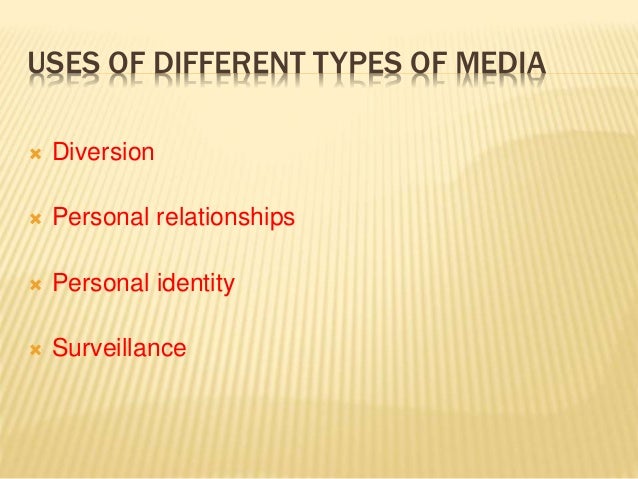
Uses and Gratifications
  1. Diversion – a form of escape or emotional release from everyday pressure
  2. Personal Relationships – companionship via media personalities and characters, and sociability through discussion about the media artefact with other people
  3. Personal identity – the ability to compare one's life with the characters and situations within the media, and so explore personal problems and perspectives
  4. Surveillance – a supply of information about what is going on in the world
Maslow's Hierarchy of Needs
  • Self- Actualisation
  • Esteem
  • Social
  • Safety
  • Physiological
Examples of the Uses and Gratifications
Diversion:
Escapism from mundane existence, purely for entertainment
  • Action films
  • music
  • tv
  • personalities
Personal Relationships:
To experience companionship with characters or with other members of audience through shared interest in media texts
  • news
  • Romance films
  • social media
Personal identity:
To identify with characters and situations and thereby make sense of one's own life and views
  • Music
  • Romance films
Surveillance:
A supply of information about what is going on in the world.
  • News
  • Drama films
For our media texts, specifically the music video our audience would be through personal identity and personal relationships. We created a fun indie music video for our band so that they would be able to feel close to the band and relate to them in different ways. 

In what ways did your audience feedback on your video illustrate this model in action?
Through using focus groups we were able to use the uses and gratifications model to get more accurate and specific information. We used different theories, such as the star image theory to construct our band and then showed to the audiences.


Star Theory
  • Richard Dyer's Star Image
  • Star images are constructed, artificial images, created through a range of products. Stars are produced and consumed on the strengths of their 'meanings'. Very often a star's meaning is very clear and obvious so that it is easy for an audience to quickly understand and make a decision whether to consume. The industry creates a range off stars with different meanings to meet the needs of different audience segments
  • Lady Gaga=? Adele=?
  • Stars are commodities produced and consumed on the strength of their meanings”
  • Focuses under Richard Negus – synthetic and organic
Spreadability
  • Henry Jenkins theory from his book Spreadable Media: Creating Value in a Network Culture published in 2013
  • Rejects the notion of 'viral', self-replicating media
  • Sees the act of spreading content as the active not passive
  • Believes that audience play crucial role in the dissemination of media products in the online age - “if it doest spread, its dead”
  • Circulation in contrast to (top down) distribution
  • Believes that sharing is an act of participation
  • That this act leads on to deeper levels of participation, the initial sharing can also be described as 'preparing to participate' [more fully]
  • Jason Mittell developed the complementary notion of 'drillability'
  • Describes media products which provide audiences with deeper layers of engagement, not just designed to attract maximum number of viewers but to retain audience for longer, in more meaningful/engaging ways.

This is my Evaluation Task 3, where I talk about the audience feedback and how it has helped my music campaign improve and make them better. I used emaze, to present my feedback and response to the feedback. Please click on the link to see the presentation in full screen.
Link to Presentation:
https://www.emaze.com/@AFZTOWTT/evaluation-question3 Powered by emaze


 What have you learnt about technologies from the process of constructing this product?


We annotated this video to show how technologies from the process of constructing our thriller. Here we talk about the different aspects of technologies that we had to work with to get the final product.

How did you attract/address your audience?

Interviewer: Good Morning Everyone, this morning we have India here, coming to talk to us about her new film Blanched, premiering on the 7th of June! Hi India!

India: Hi! Im so excited to be here

Interviewer: Were excited to have you, so lets get right to it! What are the pleasures your target audience can take from your opening sequence?

India: Well, my thriller features an upper class man who gets drunk. My target audience would not exactly find that the most appealing thing about the film however, teenage boys do like the mystery and suspense that is created in the opening sequence, which will hopefully hook them to watch the rest of the film.

Interviewer: What genre is your film?

India: My film, Blanched's, main genre is a thriller film, however it has other aspects that can be considered to change or adapt the films actual genre. It has aspects of a crime thriller, as the protagonist then goes on a hunt to find out what happened to his daughter. The opening sequence also reveals elements of horror as he murders someone within the first 2 minutes of the film.

Interviewer:Are there any other films that you would consider to be influential on yours?

India: We did not have a specific film in mind when we wrote Blanched, as we were striving for complete originality however in this industry, almost everything has been already made into a film. The films that we found relate to Blanched or have similar aspects, is definitely Taken, as it is a story about a man who's daughter gets abducted and throughout the film he is searching for her. Gone Girl relates as it is about a missing girl, which can be represented as the daughter, as well as the gory killing of her victims relates to the way in which our character kills the young girl in the title sequence.

Interviewer: Right, so tell us about your setting? Does this specifically appeal to the target audience in any way?

India: The fact that it is mostly set in a typical English cottage, would not exactly attract teenage boys however, the cottage gives off a sense of isolation as the house is secluded. Due to this the girl becomes more personal to him as she is in his house, not anywhere else. This immediately gives clues that he has kidnapped her and has planned to do this. All of which adds to the build of the thriller which is what my target audience is interested in

Interviewer: I see, you seem to keep mentioning the build of the thriller, what else builds to the thriller?

India: Well, many things contribute to it, however a main aspect that should be considered is the Music.

Interviewer: Well, of course! And how did you apply that in your thriller?

India: Through the use of non diegetic sound we added a soundtrack that created suspense and anticipation in the scene, as the scene becomes more intense so does the music and they coincide to create a sinister feeling towards the scene and the character. We edited the thriller on Adobe Premier Pro, which allowed us to play with the music and drag around the pieces in the timeline to parallel the build in the soundtrack to the build in the shot. Another element of sound that builds up the thriller is the simple silence in the beginning, as it makes it more uncomfortable and puts the audience on edge. The music as a whole would be intriguing to the audience as it adds to the convention of the genre.

Interviewer: How interesting! Are there any other parts that would be intriguing to your audience? Perhaps, the names of you actors?

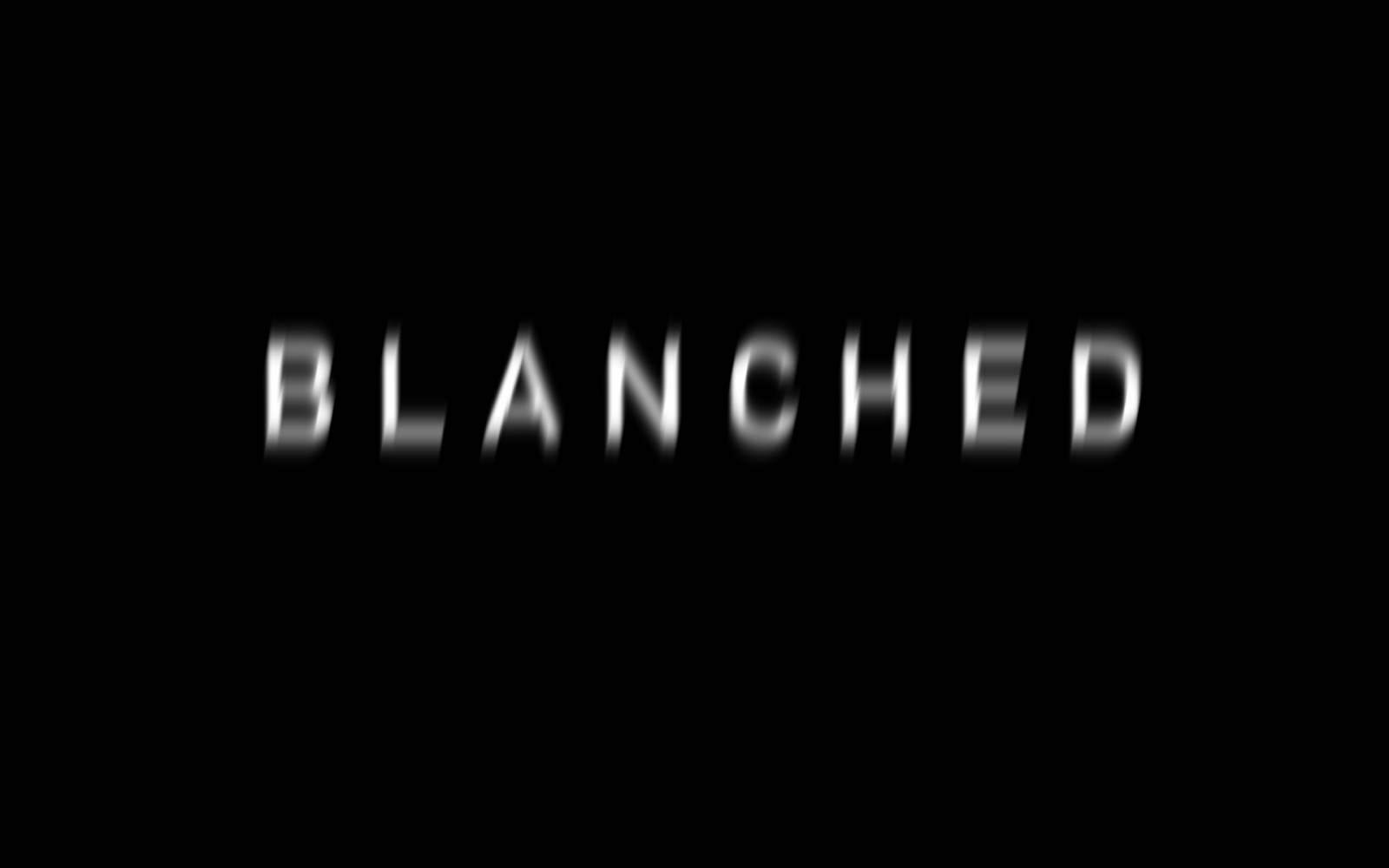
India: Well, because our film is a low budget film, we found that if we left the names of our actors out leaving for the audience to come for the narrative not the celebrities we could attract more viewers as well as hard core fans. We included few titles, only of the institution, producers and director, this way our audience could focus solely on the events happening in the film. I also decided that at the end of our thriller, when the title comes up, that the title would have some sort of blurred effect. I searched through Adobe Premier Pro and found distortion effects that created the perfect blur that would still make the title readable however with an aspect of distortion to make it look more sinister.

Interviewer: Now, I see you've mentioned some editing process that you went through, could you tell me more about that?

India: The main aspect we definitely wanted to keep in mind when editing our thriller was the pace, this is because if we made it too short and static it would have not conveyed the same intense thriller like feeling that would make the film as successful. It needs to somehow trigger the audience and we found that by manipulating the pace to build anticipation, we would be much more successful with our film. We also wanted to make it as real as possible which meant we would not be including any special effects to add to the film, in fear of making it look fake which would then break the suspension of disbelief within the film.

Interviewer: I see, and finally, what are the conventions of your thriller? And have you challenged any conventions?

India: Well the main conventions that we used in Blanched is suspense, slow paced shots, silence and a girl screaming. We challenged conventions however by having a murdered who does not want to actually kill the girl, creates a humanized side of the villain which is normally not shown in these types of films.

Interviewer: How exciting! Thank you so much for speaking with me today, I wish you the best of luck with your film. Blanched debuts on the 7th of June 2015, watch out for it guys! Its going to be a good one!


Who would be the audience for your media product?

I made a fake facebook account to portray who my thriller film would be targeted at.

Age of audience and why they would like your film?

The age of my specific target audience would be 16 going on to 17 year olds as they're are teenagers who like a thrilling film but they are also in their late teens meaning they can keep up with more intense plot lines that stimulate the brain.

Gender, and age range? Why?
The main gender that my target audience would aim for is men, because typically men prefer thriller/horror films as well as specifically crime thrillers. The age range would be around 15 year olds just up to 18 year olds, this is because teenage boys would appreciate the suspense of my thriller better.

List their interests, what would they do in their spare time? Job wise?


My target audience would be interested in TV shows such as CSI or FBI as well as thriller horror films such as Psycho and The Silence of the Lambs, and would watch these things in their spare time. They would probably also have a job in the similar field of investigation, be it either research or investigation. However my specific facebook profile audience is a teenage boy, he would not have a job as he would be studying but he would be very intellectually successful and pursue a career in investigation. This, however, is a very narrow idea of  who the target audience would be, it could range from many different people with different jobs and hobbies.

How/What would attract them to your film, e.g . genre?
They would be very interested in my film because they already apply to the specific genre my thriller would have which is a crime thriller genre, but they would want to see my film over the other crime thrillers out there because it is a new and completely original idea that many people would want to go see out of curiosity. They would also know that it is an independent film which attracts wider audiences due to the fact that people want to be able to say they first saw the film when it was not famous. 

Think about the type of film you're making and write about your secondary audience. Why might they also like your film? Is your film aimed more at a male or female audience? How would your plot attract males/females and why?
My secondary audience would be men in their mid 30's, they would like my film because they have busy lives with work and family so they would want to get away from that for an hour or so to relax and watch something that they would enjoy watching. My film would be a very satisfying plot that would be leave the audience feeling full of excitement and thrill. Although the film is aimed more at male audiences due to the stereotypical fact that men prefer crime thriller films, women would also enjoy my film as it has a family aspect that would appeal to the female audiences.


What kind of media institution might distribute your media product and why?
  • Why would your company make your film?

    Initially I chose Vertigo Films to make my film, due to the fact that they are a small British that is close by and tends to pick up individual film makers however I noticed that Universal studios would make a much better choice seeing
    as though they would be able to have enough connections to make the pre-production, production, marketing and exhibition much more successful and they would market our film globally, allowing for a larger target audience. Universal Studios would make our film because they make all genre films, ranging from Jaws to The 40 year old Virgin, which would mean they would be willing to take on a thriller/crime film. It is also a very captivating plot that would attract a large audience and hopefully win some prestigious awards.

What other films have they made?

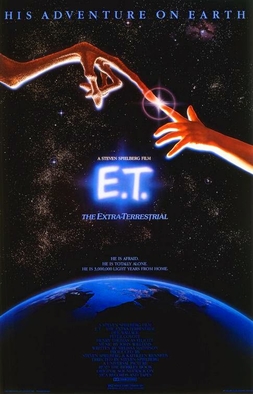
Universal Studios has made several award winning films such as Jaws, made in 1975, directed by Steven Spielberg. ET the Extra-Terrestrial, made in 1982, also directed by Steven Spielberg. As well as more recent films such as Les Miserables, released in 2013, directed by Tom Hooper, starring major actors such as Hugh Jackman, Russel Crowe and Anne Hathaway. Winning Golden Globe Awards, Academy Awards, BAFTA's and many other highly revered awards. They have done very well in the thriller department as well which further supports my reasoning for choosing Universal Studios to make my film as they made Psycho, 1960, directed by Alfred Hitchcock, The Purge: Anarchy, 2014, directed by James DeMonaco , Scarface, 1983, directed by Brian De Palma as well as many others.

  • How does the film fit the ethos of the institution? 

    Our Thriller would fit in the ethos of Universal Studios as it is a promising film that would add a lot to their reputation as it is a very original idea. Universal Studios also owns a production company in France called Universals Studios France, based in Paris, which is mostly involved in France and Co-European productions, this would be an advantage to us as we are in close quarters seeing as though France and England are both in Europe. Although Universal Studios is known for having a list actors and directors known worldwide which could be an issue in our case, they have worked with very successful directors who got their start amazing films made by Universal Studios. I think they would appreciate the low budget that we have for our thriller and use that to their advantage as they could use their connections as they are part of a conglomerate, therefore allowing us to obtain cheaper advertisement and global viewing of our Thriller.
  • How would they market your film?

    Due to our low budget they would focus on marketing via new media tactics, such as creating teaser trailers that would attract a large target audience as well as creating advertisement on facebook and various other social networking sites. Our story is applicable to create a fake scandal on facebook about the death of a teenage girl, through this manner of advertising we will be attracting many more audiences as everyone accesses they internet. Universal Studios would also market our film through Traditional Media to attract a specific target audience, therefore there could be posters up near a high school or university or even in areas more commonly known for thriller fans.
  • Do they specialise in a genre?

    Universal Studios do not specialise in a specific genre anymore however they are known for making very successful and high rated Horror and Thriller based films. All of which have very well known directors or actors in them. They tend to rear towards the more classic horrors such as Frankenstein, 1931, and Dracula's Daughter, 1936. This then coincides with the thriller themes that our thriller has which is why I think Universal Studios would be the perfect match for an institution to make our film.
  • Do the studio have a particular target audience?

    From the 1920's up until the 2000's Universal Studios had mainly focused on a Horror/Thriller vibe, however in the 2000's they began making more light hearted and different genre films. Therefore they used to have a pretty direct target audience being someone from the ages of 15-50 who would enjoy watching a Horror or Thriller, and usually a boy would prefer seeing the movie over girls. Nowadays their films range from children's movies such as Shrek 4-D that applies to all age groups as Shrek is funny enough to attract older audiences as well, Knocked up a romantic comedy attracting 15-40 year old women, and The Incredible Hulk an action film directed towards 12-30 year old boys/men.


How does your media product represent particular social groups through the use of mise en scene?

When looking at mise-en-scene we used props such as cigarettes and a broken lighter, to show his anxiety and need for relief as well as beer bottles and glasses, which adheres to the character we wanted to convey which was an alcoholic man. The representation of this character through gender, shows clearly that he is a man as we can physically see it, as well as him having the traits of a male, as there are beer bottles laying around, which is stereotypically what a man drinks, as well as straight whisky. This also shows his age, as he is obviously over 18 as he is drinking and smoking, and the way in which he handles the cigarettes and drinks, shows he has experience. Another crucial prop is the hammer, throughout the whole sequence there is an element of suspicion however the audience can not assume that the character is bad in any way until we see him pick up the hammer. This gives a direct clue that he is going to do something that might include killing someone or negative. A hammer brings up negative connotations and is a convention of a thriller/horror.

This relates to the facial expressions part of mise-en-scene where we can see when he drinks that he is used to that kind of alcohol intake therefore supporting the idea that he is an alcoholic. We can also see that he may be already quite intoxicated as he fails to pour the whisky into the glass correctly, spilling around the glass as well. When lighting the cigarette there is an obvious facial expression of anger as he is unable to light the cigarette. Here we can see the male aspect of the character as he loses his temper easily.

His costume is a black, dirty suit which is typical of a working man. The fact that the suit is black is a colour connotation to his dark side, and indicates to the audience that he has a dark side. In relation to representation the fact that he is wearing a suit shows the audience that he is at the age where he still has to work, however he is at a stable boring desk job. He is represented through his costume as a middle aged man with an unchallenging job, which may be the cause of his drinking addiction. However, the audience does not immediately assume that he may be a killer because of his costume, this then adds on to the element of surprise in our thriller and makes it more suspenseful and thrilling.

The lighting in our thriller is natural light in the first room, which gives the impression that the character is inside and it is during the day. We were lucky enough to shoot on a sunny day, that way we did not need to use specific lights to highlight our actor and were able to effectively convey to the audience that it is the middle of the day, this makes the thriller more normal therefore creating the contrast into the other room greater. The second room is quite dark and has small lights on the walls to create a darker more intimidating tone. This is effective as all the tension filled action occurs in this scene.

In relation to character positioning we decided to have the male character, the protagonist, in a different room to the girl, this way there is a change in scenery. We also wanted to create a contrast between the two characters, as our initial plan was to have shots from the different rooms to confuse the audience however when it came to editing the footage we found that it was much more effective to keep the beginning of our sequence in one room and then introduce the girl in the next room afterwards. We also chose to use two different rooms to show a sense of isolation between the characters and build tension when we then show the audience that they are in the same house, and that the male character is actually going to kill the girl in the other room. By putting the girl in a different room we can see the contrast between the two characters, being age and gender.


How does your media product represent particular social groups through the use of camera work?


With camera work we were able to experiment with different angles as well as shots. We used close ups on the man's face to show the detail of his drink and his beard, therefore showing his character as messy and broken, as well as being effective for representation the close ups show detail on the characters face to determine his age. We also have close ups on the actual glass, as he is pouring the whisky to show the concentration of the whisky and the amount that he puts into the glass. Therefore portraying his tolerance to alcohol, making his stereotypical 'alcoholic man' look more effective and real.
We also used an establishing shot of the room so that the audience can see how messy the room he lives in is, as well as the many beer bottles lying around, and the police documents on the couch. This adheres with the representation of a male, as we can tell the stereotypes of a woman being very clean and tidy where as men are supposedly messy and gross, as well as the fact that it is a gender convention to have men drinking beer and whisky.


We included low angles of the character towards the end of the sequence as the audience begins to realise that he is actually the villain in the narrative. The low angle gives him a more mysterious and intimidating look which allows the audience to believe he is about to do something villainous. The low angle also gives the actor an older look to near the age that we want our character to be.

How does your media product represent particular social groups through the use of sound?

When looking at sound for our thriller we had two different choices that we worked on. One was the whole sequence with loud rock music playing in the background and it being muffled when he is in one room and then it growing louder when in the other room. We did this to show that he was playing music so that it would drown out the sounds of the girl screaming, however we felt as though it killed the tension and suspense of our thriller too much. We also had issues with copyright as the piece we found that we preferred had copyright. The version we went with in the end is silence. The only thing we can hear are the normal human sounds made that build up the tension effectively ie. The door handle opening, the whisky being poured into the glass, his slow deep breathing. All of which show different aspects of his gender and age when referring to representation. The sounds of him breathing show his age as a symbol of an older man with loud breath. Then towards the end we have included a low drone effect before he enters the other room, this adds an air of mystery and questioning as to what the character is going to do with the hammer in his hand. The low drone has a more masculine tone to it which adheres to the male stereotypical mystery music, then there is a high pitched creepy soundtrack on top of the drone when the girl is introduced. The reason for the high pitch shows the audience that the victim is a woman, showing the representation of gender and also makes the scene more creepy and scary.
We then added a sound effect of her toe crunching and the hammer hitting the ground together which created a more believable and gory effect when the title appears. At the same time we can hear her screaming therefore representing the victims gender and age. It is obvious that she is a teenage girl.


How does your media product represent particular social groups through the use of editing?

Through editing we changed the pace of the thriller to build the suspense and tension. We did quick shots to create anticipation. We focused on continuity to create a fluid storyline as we did intent to make it as clear to the audience as possible as the actually film will not be linear. We didnt choose to include any special effects because we wanted to make it as realistic as possible. I decided to add a blurred effect however on the title at the end of the sequence, this is to add a creepy vibe to the thriller and put the audience on edge.

In what ways does your media product use, develop or challenge forms and conventions of real media products?

Comparing my thriller to the film Taken and opening sequence of A Walk Among The Tombstones


Shot for shot of both films look at the framing, camera work, lighting, mise-en-scene etc.

Taken
The mise en scene was similar between Taken and Blanched as Taken has a lot of alcohol related props, as well as the main character having the costume of a retired man.  
Blanched

Taken
Taken
Blanched
The lighting in most of the mans early scenes in his house are very dark, which contrasts to Blanched as there is a lot of natural lighting that makes the scene more vibrant, however when the main character in Blanched walks into the other room the lighting changes and as it is darker and more sinister it resembles the lighting in Taken.

Blanched
Taken
 Also the use of hidden identity is used in both my thriller and Taken, as we do not see the kidnappers in the beginning of Taken, we only see their feet and backs. In Blanched, you can not see the victims face, we only see a point of view shot from her.

Taken
Blanched
The use of low angles is also used as a similarity between both Taken and my Thriller to give the main character a sinister and more daunting look. In Taken, the low angles are not as drastic as the ones in Blanched because the main character in Blanched is the villain where as the main character in Taken is not. 


Blanched
Taken
A Walk Among the Tombstones
A similarity between the three films is the use of close ups on props to give a certain significance to that object/prop. The prop in Taken that is a huge significance is the photo of his daughter in the title opening sequence, where as there are several in Blanched such as the cigarette and the glass of whisky. In A Walk Among The Tombstones, we get close up shots of the woman's necklace and her ring.
A Walk Among the Tombstones


A Walk Among the Tombstones


Blanched

Blanched and A Walk Among the Tombstones both use two different locations in their opening title sequence, which creates an aspect of mystery and curiosity. 


A Walk Among the Tombstones


Blanched
The Framing in Blanched and A Walk Among the Tombstones is also very similar as A Walk Among the Tombstones does not focus on the whole face of the woman, it focuses on different aspects such as eyes where as in Blanched we focused on his lips, and beard.


Plot line/characters similar to the ones introduced in both films:

    When Bryan Mills flies to Paris he listens to the voice recording of the kidnapper and his one line 'good luck' over and over again. This sense of repetition shows his determination towards his daughter as well as him nearing to insanity. The repetition parallels with our thriller as continuously drinks in the title sequence, and throughout the film we would have him finding different clues that would therefore lead to the true reasoning for his daughters death. The main theme between Taken and Blanched is the concerned father having a dedication and determination to their daughter, whether it is finding her or finding out what led her to kill herself. 

    A Walk Among the Tombstones
    In A Walk Among the Tombstones there is obviously a male main character which related to Blanched however, through the opening sequence there seems to be a theme of crime and insanity in the film that coincides with Blanched. Also the fact that the opening sequence, like the opening sequence of Blanched, is very slow paced and has a soundtrack that creates an creepy and intimidating vibe for the audience.

Title font, have you used similar titles and font:

Taken
Blanched
We used similar title techniques as in Taken they decided to go for the black background and white text as our main colour to display titles, as well as us using a similar text font. They also used fade ins and fade outs for the titles as we did for our director to create a more sinister, thriller-like film.


A Walk Among the Tombstones
Taken
The title sequence of A Walk Among the Tombstones, has a similar font that is being used in Blanched, however most of the tiles, like in Taken, appear over a shot. 


What have you changed, and whats different between yours and Taken:
    For our title sequence we wanted to use a flashback to create the mood of our film, like in taken, however we decided to make a sequence that immediately showed the father in a depressed and miserable state which is then what the 'Taken' title sequence becomes. We also shot a photo frame of a young girl as in taken, to create a connection between the father and daughter for the audience to see. However we chose not to include this as we did not want to reveal too much in our title sequence.