Over
the years, a large number of academics have attempted to understand
the ways in which audiences interact with the media they consume
Three
general models have dominated this research
How did you gather your audience feedback? What methods did you use? Present you stats, feedback from questionnaire and focus groups
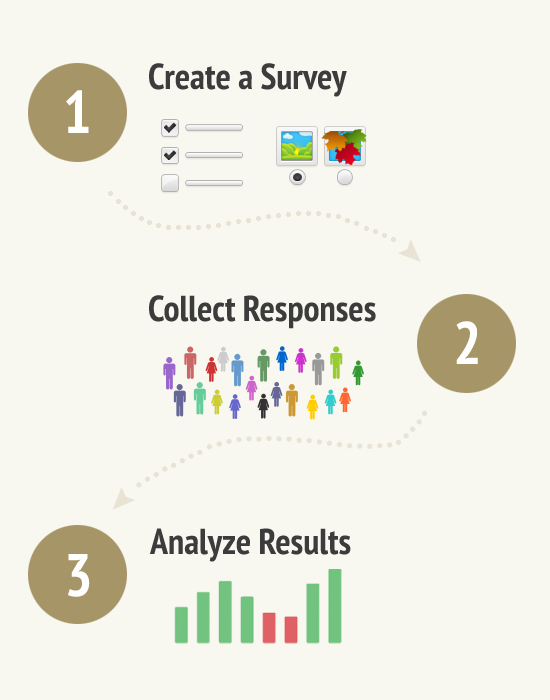
We used several different forms of gathering audience feedback such as YouTube, Freeonlinesurvey.com and Focus Groups. This allowed us to use the internet, to access a larger target audience
- YouTube
- Freeonlinesurveys.com (closed questions)
- Focus Groups (open questions)
How did the demographic or psychographic profile of your audience affect the kinds of readings they produced?
Defining
the Audience
It is useful for
institutions and academics to be able to build up detailed accounts
of how audiences are constructed
Rather than seeing
audience as masses or in simple numerical terms, it is common
practice to find ways of segmenting the audience
This segmentation
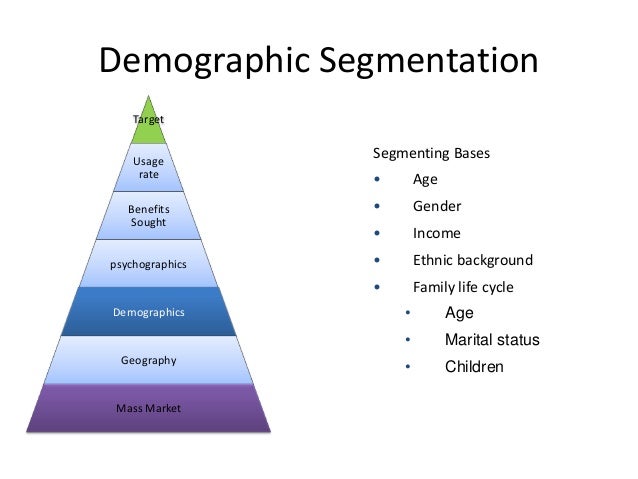
can be achieved both demographically and psychographically
Applying
Audience Theory
Look at who your
target audience was
How did you profile
your audience?
Which VALS did
specify for your audience
Did you have a
primary and secondary market – how did your production target
consumers/ youth culture? (cartoons or animated children films –
primary audience kids – secondary audience parents who take kids
to cinema)
This is where an
audience is segmented according to various significant social
criteria eg gender, class, race, sexuality
One of the most
common demographic approachers to audience involves the JICNARS
scale
JICNARS
– scale based on employment
We used demographic segmentation, as we found our target audience through age and gender. Our target audience was Girls of 15 years + and our secondary target audience was Boys of 17 year +. Therefore our audience feedback, using the focus group, was Demographic as we had a specific group of people. This was effective as we approached our target audience and asked them specific open questions which allowed us to make specific changes.
Psychographic
Segmentation
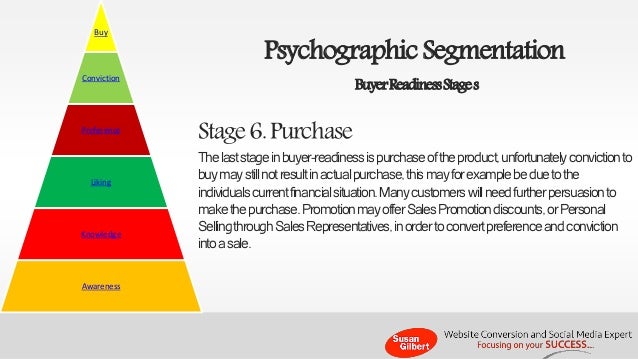
We used Psychographic Segmentation when taking audience feedback as we created a closed questioned online survey that was open to anyone who wants to take the survey. This means our audience will be a range of people who have various attitudes, beliefs, values etc.
Also known as
lifestyle profiling
 Combines a
psychological profile of the consumer, with ideas about how they
conducted their life in the market place
Combines a
psychological profile of the consumer, with ideas about how they
conducted their life in the market place
The
various attitudes, values, beliefs, and 'lifestyle'
choices are sorted into a
number of distinctive categories which are sorted into a number of
distinctive categories which are used to predict consumption. VALS,
the Values Attitudes and Lifestyles classification system is best
known of the psychographic profiling
systems
2
kinds of VALS – VALS and Teen VALS
Younger audiences would be more attracted to our band as they are a similar age to the band. They feel as though they can relate to the band as they are going through the same things as each other. The stages of rebellion.
What were the advantages/disadvantages to using these sources? How reliable was the information and the key points raised?
Some advantages to using these specific sources was that when we used the online survey using freeonlinesurveys.com, the feedback was anonymous which made the information less personal, and always encouraged a range of feedback in the sense of target audience. The online survey also puts all the information together which allowed us to put the information together quickly and correctly. The information is reliable in the sense that the information corrected is accurate.
The disadvantage of using the online survey is that it is not person specific, which means we are not able to tell who was giving us the information therefore we could not use our demographic audience feedback. However, this is why we used a focus group, which allowed us to have specific examples.
What strengths and weaknesses did the feedback indicate in your music video? Refer to specific examples and illustrate these.
There were mainly strengths when receiving feedback for our music video as our target audience really enjoyed all aspects of the music video. Specifically they liked how the woods sequences were different and engaging. As well as portraying the boys as down to earth fun guys, which is why the target audience felt compelled and interested. Another aspect that the target audience liked was the projections. They said this was mainly because it was interesting to watch ad kept them interested. This shows that our audience rejects the effects model and adheres to the uses and gratifications theory. Some weaknesses of the feedback is that they had comments about the filming for the music video. Such as the unsteady camera at the start etc. We tried to fix these things however, we were unable to go back and film more of the video as we were already in the stages of post-production.
The
Effects Model
Derives from an
early piece of audience research – the Payne Fun Studies
Implies that
audiences are passive recipient of the meanings and values of a text
Meanings swallowed
whole by innocent 'victims' that may become corrupted or depraved
Also known as the
'hypodermic needle effect'
Also implied:
Media effects are
cumulative
Media effects are
long term
Media effects are
revealed through both attitudes and behaviour
Explain the encoding/ decoding model in relation to your audience feedback, Provide examples
Encoding-Decoding
Model
Derives from the
wok of Stuart Hall at the BCCCS
A theoretical
model, which is based upon the notion that the audience do not act
as a 'mass', but rather as a collection of smaller groups defined by
social and ideological elements
Every media text is
encoded with a message
The media
industries encode their texts and we decode that text
Gathered together
based on our values, upbringing etc.
Media texts are
'encoded' (both consciously and unconsciously) with the values of
their producers – generally white, middle-class, men
However, the
audience is not made up exclusively of these groups and different
groups are likely to 'read' the text in different ways
This 'decoding'
process has 3 possible outcomes:
A preferred
reading
A negotiated
reading
An oppositional
reading
 Our target audience would understand the media texts as they are made to appeal to them and what they like, what colours they are most attracted to and what keeps them interested. However, if a person from outside of the target audience were to look at our media texts they would decode the texts negatively as they were not encoded for them specifically.
Reception
Theory (exact opposite of the effects model)
Our target audience would understand the media texts as they are made to appeal to them and what they like, what colours they are most attracted to and what keeps them interested. However, if a person from outside of the target audience were to look at our media texts they would decode the texts negatively as they were not encoded for them specifically.
Reception
Theory (exact opposite of the effects model)
Apply the uses and gratification theory to your responses – which are the most applicable points?
The
Uses and Gratifications Model
Derives from
research carried out in the 1950's – the Personal Influence study
by Lazarfeld, Blumler and Katz
Audiences are far
from passive in their approach to the media; rather they actively
choose and consume the media to satisfy particular needs and
gratifications which they exhibit
developing due to
the proliferation of technology
 Two approaches are
useful here:
Two approaches are
useful here:
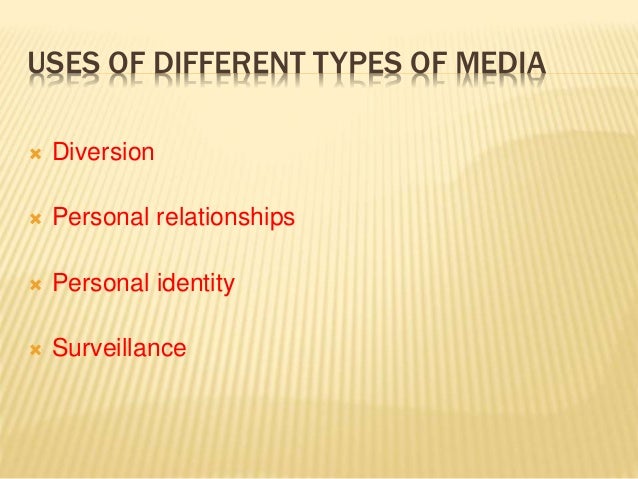
Uses
and Gratifications
Diversion – a
form of escape or emotional release from everyday pressure
Personal
Relationships – companionship via media personalities and
characters, and sociability through discussion about the media
artefact with other people
Personal identity –
the ability to compare one's life with the characters and situations
within the media, and so explore personal problems and perspectives
Surveillance – a
supply of information about what is going on in the world
Maslow's
Hierarchy of Needs
Self- Actualisation
Esteem
Social
Safety
Physiological
Examples
of the Uses and Gratifications
Diversion:
Escapism from
mundane existence, purely for entertainment
-
Action films
music
tv
personalities
Personal
Relationships:
To experience
companionship with characters or with other members of audience
through shared interest in media texts
news
Romance films
social media
Personal identity:
To identify with
characters and situations and thereby make sense of one's own life
and views
Surveillance:
A supply of
information about what is going on in the world.
For our media texts, specifically the music video our audience would be through personal identity and personal relationships. We created a fun indie music video for our band so that they would be able to feel close to the band and relate to them in different ways.
In what ways did your audience feedback on your video illustrate this model in action?
Through using focus groups we were able to use the uses and gratifications model to get more accurate and specific information. We used different theories, such as the star image theory to construct our band and then showed to the audiences.
Richard Dyer's Star
Image
 Star images are
constructed, artificial images, created through a range of products.
Stars are produced and consumed on the strengths of their
'meanings'. Very often a star's meaning is very clear and obvious so
that it is easy for an audience to quickly understand and make a
decision whether to consume. The industry creates a range off stars
with different meanings to meet the needs of different audience
segments
Star images are
constructed, artificial images, created through a range of products.
Stars are produced and consumed on the strengths of their
'meanings'. Very often a star's meaning is very clear and obvious so
that it is easy for an audience to quickly understand and make a
decision whether to consume. The industry creates a range off stars
with different meanings to meet the needs of different audience
segments
-
“Stars are
commodities produced and consumed on the strength of their meanings”
Focuses under
Richard Negus – synthetic and organic
Spreadability
Henry Jenkins
theory from his book Spreadable Media: Creating Value in a Network
Culture published in 2013
Rejects the notion
of 'viral', self-replicating media
Sees the act of
spreading content as the active not passive
Believes that
audience play crucial role in the dissemination of media products in
the online age - “if it doest spread, its dead”
Circulation in
contrast to (top down) distribution
Believes that
sharing is an act of participation
That this act leads
on to deeper levels of participation, the initial sharing can also
be described as 'preparing to participate' [more fully]
Jason Mittell
developed the complementary notion of 'drillability'
Describes media
products which provide audiences with deeper layers of engagement,
not just designed to attract maximum number of viewers but to retain
audience for longer, in more meaningful/engaging ways.